Saturday, May 18, 2013

Sara Davis Buechner - "That's Pathetic!"

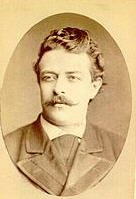
American-born and trained (Juilliard, Manhattan School of Music) pianist Sara Davis Buechner gives an enlightening lecture-demonstration on the ubiquitous Beethoven Piano Sonata in C Minor, op. 13, known to every living organism as the "Pathetique" Sonata (and might I add, one of the few sonatas to which Beethoven attached a "nickname".)
 
EVERY PIANO STUDENT who loves the "Pathetique" (and who doesn't?) MUST watch this.  She gives an enlightening talk about the origins of this sonata, and its connection to the Mozart Sonata in C Minor, K.457.


And speaking of "living organism", that might be an offbeat way to describe Buechner's playing.  Intensely powerful, often athletic, everything she does is backed up by a tremendous, disciplined technique and total immersion in the style of the music being performed.

Her recordings of "byways in the piano repertoire", such as piano music by Rudolf Friml, Miklos Rozsa, and neglected American "lady composer" Dana Suesse, are enjoyable listening.  Ms. Buechner has also edited some music for Dover, including a volume of the wonderful and neglected music of Russian composer Anton Arensky.

Let's take a look at her pedigree (cribbed from another website):

Education: Juilliard School of Music, NYC, diploma; Manhattan School of Music, doctorate in music.

New York University, faculty member; University of British Columbia, School of Music, assistant professor, 2003–.

Awards: Gold Medal, Gina Bachauer International Piano Competition, 1984; Bronze Medal, Tchaikovsky International Piano Competition, 1986; Deutsches Schallplatten Preis, for recording of piano concertos by Bernard Herrmann and Franz Waxmann, 1995.

YEP.  a BRONZE medal in the TCHAIKOVSKY competition.

An abridged list of her recordings:

Piano Music of George Gershwin, Connoisseur Society, 1994.
Henry Martin: Preludes and Fugues, GM Recordings, 1994.
The Paradine Case: Hollywood Piano Concertos, Koch International Classics, 1995.
Bach-Busoni Goldberg Variations, Connoisseur Society, 1997.
Rózsa: Complete Works for Solo Piano, Koch International Classics, 1999.
Stephen Foster: Complete Piano Works, Pro Piano, 2002.
Piano Music of Rudolf Friml, Koch International Classics, 2004.
Joaquin Turina: Mujeres Españolas, Koch International Classics, 2004

SO...  Why have we Americans so overlooked one of our own? 

She was born David Buechner.  That's why.  Read more here.

Our loss is Canada's gain. 

Americans are becoming more accepting of public figures who are gay, lesbian, or transgender.  But it seems that the Classical Music world, even with its disproportionately large number of LGBT performers, listeners, and fans, are slow to accept its own. 

Here is Sara's story, in her own words, from an article published last February.

Sara Davis Buecher has lived her life with dignity and courage.  And she deserves our attention.  And more bookings in her native land.

Saturday, February 23, 2013

"My teacher" performs "my music"

My college teacher Susie Francis Dempsey (a recurring "character" in the tales I spin here) recently celebrated a birthday.  I don't know which one; I'm a musician and can only count to four.

This video of Dr. Dempsey performing my "Arietta" (2006) was made in 2009, when she performed it in a studio recital.  Yours truly caught it on his Flip camera (remember those?) and a precious (to me, anyway) memory was saved.

The little "diva nod" before she started is priceless.  I think I told her I needed a moment to make sure the Flip was up and running.  She was ready for her close-up, Max.


Since she has retired from college teaching, she is teaching privately in her home studio - see my previous post for a scene from her studio - she is performing more frequently - which is a good thing.  Of course I am biased, but I have always been enamored of her singing tone, and it is something I have tried to pass on to my students.
 
Happy belated birthday, Dr. Dempsey.  You have left a legacy in the many musicians you have taught in the Southeast - as a piano teacher, and as a fabulous theory professor at Jacksonville State University, to many music educators in schools today.  You are still touching lives today, and hopefully for years to come.

Saturday, November 3, 2012

Claude Debussy, himself, plays "The Engulfed Cathedral"

If you're still not convinced that scholars such as Maurice Hinson are correct as to how Debussy's "The Sunken Cathedral" should be played, here is INCONTROVERTIBLE EVIDENCE.

Here is a piano roll of the work made by Debussy himself.

Some argue (convincingly) that piano rolls aren't necessarily a complete picture of a performance.  It is true that the tempo can be tampered with, and like present-day recordings, missed notes and uneven passages could be "fixed".  But once the tempo is set, it stays. 

This explains the rather unorthodox combined time signature of 3/2 and 6/4.  Some sections are played with the half note as a beat unit, some with the quarter note as the beat unit.

Record collectors state that it was "played correctly" on recordings until Walter Gieseking recorded it (wrong).  In fact, I have an early Arthur Rubinstein recording where he plays it like this.

Let's stop arguing the point and play it the way the Master did.


Tuesday, August 14, 2012

A lesson from my first teacher - from beyond the grave

I enjoy leafing through old piano music, especially music that was studied, scribbled upon, and obviously cherished by its former owner.  Sometimes those markings can give us new or overlooked insights into the piece, or perhaps a solution to a nagging technical problem can be found.

I have always loved Bartok's set of Rumanian Folk Dances, although I have never performed them.  I cherish my old Lili Kraus recording on a Parlophone 78 rpm record, and admire the recording by Zoltan Kocsis with what I presume to be his own "concert variants".  The notes are not that difficult to cover, but there are some awkward spots, and it seems that Bartok put a marking of some kind on at least every other note.  Finicky, finicky.

The reason I have never performed them is in the very last line, the conclusion to the whole set.  There is a right hand passage that imitates the double stops of the violin, holding the upper voice while the lower voice darts around in sixteenths. I have never been able to play this smoothly and up to tempo using the printed fingering.

This past Saturday I went to an estate sale.  The estate was that of my first piano teacher, Myra Williamson.  Before the sale, her children (my cousins) had generously allowed me to have a generous amount of her music, and her old International Library of Piano Music now has a place of pride in my living room.

Between her death and her estate sale, more music was found - her volumes of Chopin in the Schirmer/Joseffy edition, some contemporary music, and a copy of the above-mentioned Bartok. At first, I thought the bold "Lili Kraus" script on the cover was an autograph.  When I opened it, I realized it was her teacher's handwriting, probably a recommendation for listening. The score was lavishly marked, "Myra Keeble" signed on the cover, and notations throughout the score in Myra's and her teacher's handwriting.

While waiting for a student today, I sat down and read through this favorite work, feeling a little comforted by seeing Myra's precise script.  Dance after dance, and then when I got to the last page, my Waterloo:


And there was The Fingering.  A message from Myra, from beyond the grave.  Either she devised a fingering more appropriate for her small hand, or her teacher gave it to her.  And it works for me as well.  So it won't be long before this piece is securely in my working repertoire. 

Thanks, Myra.  I miss you.  Your old music ain't gathering dust no more.

I'm trying to get back to blogging, my friends.  It's difficult.  My desktop computer still isn't fixed, and this netbook is not conducive to all the cutting and pasting I used to do to add hyperlinks in the text.  But this is a start.  I had to get back in the pool.

Thursday, July 7, 2011

Mama's Song

As my regular readers know, my mother passed away last December after an extended illness, and I still haven't really gotten out of that cloud yet.  You can read my December 2010 post about her, and our musical connection, here.

Late last night (July 6), I finally finished one of those projects that we had planned to do together. Mama wrote a song years ago, as a young girl.  It may be better to say that she "made it up", since she could not read or write music.  The name of the song was "In the Arms of Jesus", and to my knowledge there were never any words.  A phone conversation in August 2011 with my aunt LaVelle Langley affirmed my belief that there were no words to the song.  Also, Aunt LaVelle recalls hearing Mama play it often, which is something that my brother and sister do not recall - understandable since they did not spend as much time with Mama at the piano as I did.

I wanted to make videos of Mama's playing while she was still able, but she had "camera fright", and arthritis got to her before the COPD-related dementia did.  The touch of my Baldwin grand was too heavy for her to play comfortably.  I had promised her for years that I would write "her song" down.

That finally happened last night after a practice session with an old friend, the Liszt Sonetto 104 del Petrarca.  I tinkered with Mama's song for around an hour, and decided to give it a new voice.

After I wrote it out, I decided to make a "demo" video to share with friends and family on Facebook.  The original plan was to make another video for YouTube (and this blog) after church Sunday, on a better-regulated instrument.  This Baldwin grand, my pride and joy (and a college-graduation gift from Mama and Papa Doug), has not been tuned since nineteen-eighty-something - one of the few "downsides" of living in the country is finding a reliable tuner/technician. 

In the end I decided to post this "rough video" after all. This is where I had most recently heard her play her version, on this piano in this room, and this is a rare opportunity for me to let you in Mama's living room for possibly one last time as the estate is settled, as our family home may not stay in the family.   With five bedrooms, three bathrooms, and eleven ACRES of yard, it is far too large for me to maintain on my own.
 
Here it is.  I have left her tune as is and recast it in "my style", rather than in the hymn-like chordal way in which she played it.  I have retitled it "Mama's Song".  Why?

We all have different religious beliefs, but we all have, or have had, a Mama.


Why the link to this book?  Although it has nothing to do with music, it always reminded me of Mama - I loaned her my copy and she read it, and enjoyed it very much.  Also, author Rick Bragg grew up in Jacksonville, Alabama and studied at Jacksonville State University at the very same time as me, so I remember well the places he describes in this book.

Saturday, June 18, 2011

A reader in Australia searches for a sad bird

Letters, I get letters...

Michael in Melbourne, Australia writes:

I heard "Sad Bird/Pajaro Triste" on the radio some time ago and later saw your video of one of your (very talented) students playing it. Anyway could you forward publication details for the piano sheet music as I have been unable to find it?

Anyone who compliments one of my students is a friend of mine.  

The piece "Pajaro triste" is by Federico Mompou (1893-1987) and comes from a collection entitled "Impresiones intimas".  (I have also seen it spelled "Impresiones intimes".)  The original Union Musical Espanola (imagine the tilde) edition of the complete set costs mucho, mucho dinero, but is available from your favorite music dealer.

However...

People who wish to have this one piece are in luck.  It is included in the Alfred anthology Keys to Stylistic Mastery, Book 3 by Dennis Alexander and Ingrid Jacobson Clarfield.

 
It is beautifully edited, with performance suggestions, and of course the rest of the collection is very valuable for teaching and repertoire purposes.  This volume currently sells for $9.95.  I recommend this series highly, as well as another similar series by the same two writers/editors, Keys to Artistic Performance.


There are many complete surveys of Mompou's music available on CDs, including those by Martin Jones (full-price) and Jordi Maso (budget label, but thoroughly enjoyable).  Mompou himself recorded much of his music in the later "stereo LP" era so we can hear how he interpreted it.  But for an all-around "sample disc", no one has beaten Stephen Hough in this repertoire.  I have posted an Amazon link to this CD, and it is available on iTunes as well.
 

Monday, April 25, 2011

Let's go back in time - to 1899, and meet (and hear) Alfred Grünfeld

It's time we became reacquainted with this man.


Pianist Alfred Grünfeld (1852-1924) was born in Prague, studied at the Kullak Academy in Berlin and eventually moved to Vienna, where he became a popular teacher and performer. He was court pianist to Emperor Wilhelm I of Germany. He knew Brahms, Strauss and Leschetizky.

Based on extant concert programmes, Grünfeld was a pianist of intellect and virtuosic abilities. Famed Viennese critic Eduard Hanslick said of Grünfeld, "He is a musician beyond criticism; in public and in private one of the best known members of Vienna society, and the greatest favorite with all musical people.  By his brilliant playing as well as his sweet expression and gay humour, he understands to perfection the art of charming his listeners in Vienna."  That's high praise from a notoriously tough critic.

He performed many of the major works of Beethoven, Bach, Chopin, Schumann, Schubert and Brahms, often including new works by composers of the day, such as Grieg’s Ballade, Op. 24. His brother, cellist Heinrich Grünfeld, was equally well known and made some recordings as well.

He was a prolific composer, mostly of shorter character pieces, and effective transcriptions. He toured extensively in Germany, Russia, Scandanavia, France, Hungary, Poland, Romania, and even the United States.  He recorded extensively, as early as 1899 (on acoustic Berliners).  So why is he forgotten today?

Actually, record collectors never forgot him.  But most pianists think of him as a "salon artist", whiling away the time playing salon paraphrases of this and that.  But he also recorded works by Brahms, Schubert, Grieg, and even something as "modern" as Debussy's "Golliwogg's Cakewalk"!  On these discs it is evident that his style was elegant and charming, just as Hanslick notes.  A pearly tone and tranlucent quality comes through on these recordings, even the earliest ones.

Here I present one of the rare 1899 Berliner recordings (alas, not mine) of the Grieg "Papillon", op. 43 no. 1.


His "Soiree de Vienne", op. 56 is still in the repertoire of pianists such as Evgeny Kissin, Jean-Yves Thibaudet, and even Lang Lang has been known to pound insensitively through it.  There are videos of many of these on You Tube, but let us see how Der Meister played it.  If it sounds familiar, it's because it is a transcription of waltzes from Johann Strauss's "Die Fledermaus".


From my collection.  Recorded c. 1905.
 
Scores of Grünfeld's works may be found at IMSLP by clicking here.  The score for his best-known work, the above-performed Soiree de Vienne, is still under copyright in the United States and can be purchased through the link below.

Monday, March 28, 2011

A teenager's first inspiration

Ingrid Haebler.
Don't know her?  You should.

When I was a teenage piano student growing up in rural Alabama, I didn't have much access to recordings of the "great pianists".

I was transitioning from method-book pieces and "teaching favorites" to more standard repertoire, and among that repertoire was Chopin Waltzes. My teacher at the time, Jimmy New, used the Chopin Waltzes as core repertoire (along with Beethoven Sonatas and Bach Inventions), and I probably played five or six of them during the two years I worked with him.

The Chopin Waltz op. 69 no. 1 was the first "repertoire" piece I performed in a recital. Before that, it had been a steady stream of Burgmüller, Heller, Anna Magdalena Bach Notebook, and the various delights that the John Thompson Modern Course for the Piano had to offer.

So, there in a drugstore (of all places! in Village Mall at Auburn, Alabama, I came across a box set of Chopin, played by the finest pianists the Vox Box had to offer. I snatched that baby up.

The set contained a disc of the Waltzes played by Ingrid Haebler.  This was the first time I had ever actually heard a recording of a concert pianist playing a piece I was playing, and it was an epiphany.  (Students nowadays can hear CD recordings of even the most basic piano repertoire, and there are even Heller and Burgmüller cycles on CD these days, but back then, we only had the Educo records, with variable and often terrible sound quality.)

Later I bought discs by better-known Chopin pianists, including the usually-preferred Arthur Rubinstein.  But one never forgets their first love, and I found his waltz recordings cold compared to Ms.  Haebler.

When Ingrid Haebler was included in Tom Deacon's Philips "Great Pianists of the Twentieth Century" collection, it was one of the more controversial choices.  But not for me.  Her Mozart is her calling card, and it is admired to this day.  But I will always adore her Waltzes, because of the inspiration they gave to a teenage piano student.  And I want to share some of her Chopin with you.


And if you've followed the trail of pianists whose work was cribbed and presented as the work of Joyce Hatto, you will find that "Hatto's" Mozart Sonatas are actually the work of Haebler for the Denon label.

I have been a "fan" of Ms. Haebler's playing for years.  There are currently no Haebler recordings available on Amazon.com, but the diligent record collector can find copies of her recordings at other sources. 

Many years later I gave that old LP box set to a student.  I later regretted it, and searched eBay and used-record stores until I found an old Vox LP disc of her Waltzes - so I have her performances again. 

I remember my first kiss, my first date, my first love - and my first Chopin.  To this day.  So thank you, Ingrid Haebler, for the inspiration you gave to this gangly teenage boy.  And I know that I am just one of many who have been inspired by your playing.

Saturday, March 12, 2011

William Kapell plays - in only known video clip


William Kapell (1922-1953) was a brilliant American pianist whose life and career were cut short by the crash of an airplane on which he was returning from an overseas tour in October 1953. He was barely 31, but was already acknowledged as the leading American pianist of his generation; some have said he would have been the greatest pianist of the 20th century.
 
Born in 1922, Kapell studied piano with Dorothea Anderson LaFollette at the Yorkville Settlement School in New York and with Olga Samaroff at the Philadelphia Conservatory and, later, at the Juilliard School. In 1941, he won both a Naumburg Award and the Philadelphia Orchestra Youth Concert competition. This gave him opportunities for major debuts both as a recitalist and as a player of concerti. In 1942, he was given the Town Hall Endowment Series Award, providing him with yet another Town Hall recital during the 1942-43 season. He then signed a contract with RCA Victor and recorded a wide variety of repertoire for that company. (All of Kapell's RCA recordings have been reissued in compact disc format.)
 
He toured North America annually thereafter, performing both with major orchestras and as a recitalist. He became an advocate of contemporary American piano music, and seems to have been especially prized by American composers. In 1945, he played a series of concerts in Australia, beginning to build an international reputation. He toured South America three times (1946, 1948, and 1951). He seemed to have a particular affection for music of South America that is reflected in his personal collection of piano music. He first played in Europe in 1947. In mid-1953 he performed in Tel Aviv, played at Casals's Prades Festival, and gave his final series of performances during the course of a three-month Australian tour. Returning from Australia, his plane crashed into a mountain moments before its scheduled landing in San Francisco.   (This biographical sketch from the International Piano Archives website.)

This is the only known video footage of pianist William Kapell. He performs the Scarlatti Sonata in E major, K.380 (L.23), the Chopin Nocturne in E flat, op. 55 no. 2, and Gato, an Argentine dance by Emilio A. Napolitano.


And as an encore, here is his legendary performance of Liszt's Mephisto Waltz no. 1, recorded when he was only 22 and still considered among the best of this work.


William Kapell: A Documentary Life History of the American Pianist by Tim Page, available at amazon.com, as well as the CD collection below:

Saturday, March 5, 2011

Myra Hess plays the "Appassionata" first movement - video


A treasure of a video - unfortunately she only made a motion picture of the first movement. Dame Myra Hess (1890-1965) in a lunchtime concert at the National Gallery during World War II, playing the opening movement of Beethoven's Piano Sonata in F minor, Op 57 ("Appassionata").


Sunday, February 20, 2011

The 2011 American Liszt Society conference, as described to a layman

[This is a little note I posted to Facebook this morning, as many of my hometown friends do not understand or appreciate things that every reader of this blog takes for granted.

*** *** ***

I cannot begin to share how yesterday's experience at the American Liszt Society conference went - I felt like Cinderella at the ball.  And as many of us classical music folks know, it is difficult to describe certain events to those of our friends who do not understand our fascination, or do not know the accomplishments of certain people we respect and idolize.  So I will put it in layman's terms for you all, and send a private message later for those who really want to know the what and who.

When I arrived an hour and a half early, Paula Deen took me my the hand, hugged me, and we had lunch together, an unexpected surprise.  Once that was over, she and I ran into Tyler Florence.  Tyler had the inside scoop as to where Rachael Ray was, and he whisked me through the crowd to meet her.  Rachael seemed happy to meet me face-to-face, as we have communicated for five years only by e-mail and one phone call, because of the time she used my recipe for Romantic  Chicken  Pasta Bake in her book "Cooking: Casserole By Casserole".  She immediately introduced me to her traveling companion, an editor at Deep-Fat Frying Magazine - who actually expressed an interest in seeing some of my recipes, and possibly bringing back the idea of publishing an article about me, my small-town cooking career and my recipes, written by Emily Moe.  (Emily is the only character in this narrative, other than me, who is identified by her real name.)

Paula proceeded to accompany me to all the other events.  During Martha Stewart's lecture, we were amazed at the new ideas she is still able to produce.  Betty Crocker bowled us over with a new recipe, proving to the crowd she still "had it" after all these years.  She got the loudest, longest, and most heartfelt ovation of the day. 

Several of us were surprised that Emeril Lagasse didn't show up, but you know, he's so last-decade.  Aunt Jemima did attend Friday, however; I missed her presentation.  Paula Deen was quite impressed with her, and told me that she even wore her trademark bandanna.  Retro is good.

I will be forever in debt to Paula for thinking of me and inviting me to attend this convention - it was great to see Rachael, and perhaps, some of my recipes will FINALLY see the light in a more mainstream, and more readily available, cookbook.

(This write-up is dedicated to Matt Woods, who although he is an amazing musician, would have been more impressed, and far more envious, if the above narrative was what actually happened.)

I will reveal the identity of only one person in this write-up to you readers.  "Paula Deen" is actually Gregor Benko, the co-founder of the International Piano Archives, and an idol of mine since my teen years.  There's also a pretty strong clue here as to who Rachael Ray is.

Thursday, December 30, 2010

Today, I said goodbye to my mother

Joyce Helen French Robertson Moring
May 26, 1930 - December 29, 2010

She wasn't famous, but she did play the piano.  By ear.  And pretty good at that.  She also sang, with a clear, pleasant voice, on key, but in a baritone range.  She always said it was because of a tonsillectomy she had relatively late in life, but I suspect it really was the years of smoking.

My mother ended her battle with chronic obstructive pulmonary disorder (COPD) yesterday.  The past year had been especially tough, as dementia took hold of her brain in late 2009, with a brief but not complete respite during the summer months of 2010.  Although her memory was not reliable, she never "forgot who we were" - well, she did call me by my late father's name once, but just once - and just this past Monday morning I took my laptop computer to the hospital to show her the video I had shot of our family Christmas Eve get-together.  She watched the video, pointing out her great-grandchildren and commenting on how pretty the decorations were.  She was unable to come home for Christmas, and my brother, his son's family, and I had worked until the morning of Christmas Eve to decorate the house for the gathering.

Mama loved Christmas.  She loved the music.  She loved the decorations.  Oh, how she loved the decorations.  Candles in the windows, wreaths on the shutters and on the big front door, at least two hand-painted ceramic manger scenes displayed throughout the house, all the knick-knacks packed up and replaced with special Christmas knick-knacks, and two Christmas trees.  One "real", and one aluminum tree.  When aluminum trees fell out of fashion, We just had a "real" one, which was eventually replaced with a tasteful artificial green tree.

Christmas 1962.  I'm the cute one..

The console stereo in the living room would be fitted with a stack of Christmas LPs: Floyd Cramer, the Lennon Sisters, Ferrante and Teicher, Andy Williams, Roger Williams, and the Organ and Chimes of Robert Rheims.  We wore out at least three copies of that organ and chimes record through the years.

Mama loved Christmas.  1976 or 1977.  She had not remarried, and there was only one grandchild.
I think my childhood love of music came from the Christmas season, from the lush harmonies and orchestrations of the records she played during that time of the year.  As I grew older, I found these lush sounds in the music of my piano lessons - Chopin, Debussy, Beethoven, Bartok.  Mama never really cared much for most of the classical music I played, but she supported me just the same.

After a few years of spiritual wandering, I returned to church music in August of 2006, taking a post as pianist in a small United Methodist Church in Franklin, Georgia.  My affiliation with this church went back a long way, as many of their members' children had studied with me.  I left that church in October 2016 and now serve as pianist at Loyd Presbyterian Church in LaGrange, Georgia.


Anytime I played for family gatherings, Mama would say, "Now, play my piece".  In three recitals that I performed in churches, she asked me to play "her" piece as an encore, and I did.  When she became ill, I dropped it from my repertoire.  An incident happened at my church recently, and I felt led to play the piece as a special music offering, without having practiced or played it in over ten months.  After church, I made the video below.

Mama, can you hear me? 


(Andrae Crouch's My Tribute (To God Be the Glory) - modeled after Dino Kartsonakis' arrangement)


JULY 2011 UPDATE:  I wrote an arrangement of a song Mama made up as a young girl and often played for me.  That story, and a link to a video performance, may be found here.

*** *** ***

Joyce Helen French Robertson Moring

(ROANOKE, ALABAMA) The funeral for Joyce Helen French Robertson Moring, 80, of Roanoke was held at 1 p.m., Friday, Dec. 31, 2010, at First United Methodist Church with the Rev. Steve Baccus officiating.  Burial followed in Randolph Memory Gardens.  Mrs. Moring died Wednesday, Dec. 29, at Randolph Medical Center, after a long battle with chronic obstructive pulmonary disorder.

Mrs. Moring was born May 26, 1930, the daughter of James Monroe and Mary Ella Sikes French. She was a member of Roanoke First United Methodist Church, had been a homemaker, and managed a family business, Bob's Grocery.

Mrs. Moring is survived by one daughter, Deborah Ann (husband Paul) McMurray of Roanoke; two sons, H.G. "Robbie" Robertson and Richard Earl "Rick" Robertson of Roanoke; two sisters, LaVelle Langley of Roanoke and Frances Johnson of McDonough, Ga.; seven grandchildren and 11 great-grandchildren.

Mrs. Moring was preceded in death by her husband of 24 years (1947-1971), Hansard "Bob" Robertson; her husband of 30 years (1977-2007), Douglas Grice Moring; her parents; and nine other brothers and sisters.

Pallbearers were Harry Botsford, Bobby Robertson, Steven Robertson, Gus McMurray, Will McMurray, Gilbert L. Huey Jr., David Cummings, and Steve Cummings.

Quattlebaum Funeral Home, Roanoke.


A picture from 1947, the year she married my father.  The picture is inscribed to him on the back.


Mama loved her cars.  Here she is with her beloved 1970 Cadillac Sedan de Ville, the last car my father


September 19, 2009. The day Robbie and I brought Cookie home to her new Mama. In a month the decline began and Mama was in the hospital. But hey, you're looking at a 79-year-old woman in this picture, and that's her real hair color.  I still have Cookie, and she is a comfort to a lonely old piano teacher.


Mama's 80th birthday.  May 2010.  She was lucid.  She was beautiful.  She so enjoyed spending time with her family, and her visit with friends Mary Reeves, Mary Agnes Messer, and Frankie Neighbors.


Sunday, December 12, 2010

Florence Foster Jenkins - the Carnegie Hall Program!

A little sleuthing on the Internet can give us some of the most interesting things.


All I can say is - oh, to have been there.

Lady Florence (as she preferred to be called) in her younger years.
Us record collectors lovingly call her Flofojen.

Pictured below is what I believe to be the first commercial issue of the Florence Foster Jenkins recordings, a 10-inch LP containing only the Jenkins tracks.  It was later released on a 12-inch LP, deleting "Serenata mexicana" and including the "Jenny Williams and Thomas Burns" Faust recordings on the reverse.  There is also a two-45 rpm record set of the same material, which I own, but can't get my hands on at the moment.  She made her recordings at Melotone Studios in New York City, which was a label that made "vanity" recordings.  In other words, you paid, you recorded, you got boxes of records.  At least one of these (the Magic Flute aria) was sold commercially (and actually reviewed in record magazines!), but these were mostly made available to friends and admirers.


And even though I have shown it elsewhere, here is a copy of one of the Melotone 78 rpm records.  I am proud to own a complete set of the known extant recordings, and this one is by far the most scarce.


This DVD pictured on the left, produced by Donald Collup, is a highly recommended documentary of the life and times of Lady Florence.  It is beautifully and sensitively done, and gives the viewer a great deal of insight as to what drove her to perform.  The old BMG  (formerly RCA Victor) CD "The Glory (???) Of the Human Voice" is the standard old collection of Flofojen chestnuts, it is readily available, but does not include the "Valse caressante" featured on the Lennick "Murder on the High C's" on Naxos, or Gregor Benko's "The Muse Surmounted" on Homophone/VAI.  "The Muse Surmounted" is reviewed in depth on this blog, and that post may be read here.  I am probably not exaggerating when I say that my sense of humor, and my love of music, has been influenced by Florence Foster Jenkins, as I had a vinyl LP copy of her Victor album since my teenage years, and modeled a stage persona from my college years, "Tessie Tura", after her.  It's hard to deny that through the cacophony, the lack of rhythm, and frankly the lack of much else that marks even mediocre singing ability, that there was no lack of joy in her singing,


Saturday, November 20, 2010

The highest compliment...

...that one can give me is not to compliment my writing, my compositions, my artwork, or even my are-they-blue-or-green eyes. 

The highest compliment one can give me is to actually learn one of my compositions, interpret it, and preserve that performance for posterity.


I received a pleasant "surprise" in my mail Thursday afternoon.   Chase Kimball, a talented amateur pianist (in the best sense of the word - meaning an adult who is trained as a musician but makes his or her living in another field; Chase is an attorney) has been "threatening" to make a private CD for some time.  In fact I knew that he had recorded my piece (actually twice, with differing ideas as to tempo) and we had discussed another of my pieces, currently in a state of perpetual rewrite.  (I'll finish it soon, Chase.  I promise.)

Chase and I e-met through the many and varied piano discussion groups that inhabit the Internet.  He is a member of the board of directors of the Gina Bachauer International Piano Foundation in Utah.

Why did he do this?  He can sum it up better than I can.  (Click to "embiggen".)


Sometimes, it's the little things that make me happy, and remind me that all those years of scribbling notes on music paper may not have been in vain.  Thank you, Chase.  A little validation can go a long way.


He's not the first, however.  David De Lucia recorded my Romance in D Flat waaaaay back in 2005 on his CD "Show Some Emotion".  That recording is the first commercial recording of one of my compositions.  Don Satz gave the CD a positive review at http://www.classical.net/, although he got some of my biographical information wrong.  (Evidently no one has ever heard of Roanoke, Alabama, and I have to admit that I find that understandable.  I know that De Lucia knew of my home state, so I'm guessing that there were some assumptions on the part of the reviewer....)

Thursday, October 7, 2010

FLASHBACK - Teaching Tiffany

(The first part of this post was written in 1996.)

Working with special-needs children can be a rewarding experience, and one that private music teachers seldom enjoy. In our endeavors we often seek out the most talented and work with them to achieve their highest potential, eliminating the ones we may consider the less gifted in the interview process. I learned this through personal experience, and feel compelled to share my story of how I met one special child, and how we have touched each other's lives.

When I interviewed for a teaching position at First School of Music in LaGrange, Georgia, the director asked me the usual questions about my background, degrees, and teaching experience. One question stood out in my mind during the interview, and I saw the relevance of the question later.

What is one goal that you have set for yourself as a teacher? What one thing would you like to say that you have accomplished?"

I had two answers in my mind to that question - one is to see my name in print as a composer, and the other is to take a young student with only a left hand, and teach them from the beginning to play piano. Realizing that this man would rather hear the less self-centered answer, I voiced the latter.

I remember his surprise at this statement. In fact, I elaborated on my answer somewhat defensively, reminding him that there was, in fact, a large body of music for the left hand alone that is rarely performed these days. At any rate, and more important to me at the time, I was hired in January of 1990.

Sometime in May of that year, I was called back into the office by his secretary. Would I consider taking a girl, from a musical family, who had no fingers on her right hand?

Without hesitation I said yes.

Tiffany was ten years old. She was a bright and intelligent girl, with a very positive outlook on life and a very mature attitude about her handicap. In fact, she has never considered herself handicapped. Being born without fingers on her right hand had never stopped her from doing other things little girls do - one does not need fingers to dance, or to sing. And she learned to tie her own shoes, to jump rope, to cheer, and to march in her high school drill team, spinning a flag mounted on a specially-fitted pole.

When I first assessed her musical situation, I found that there was quite a lot to work with. Her mother had studied piano throughout high school and could have majored in piano, but chose elementary education. Her older sister Maria had studied piano and voice for a few years, and the two sisters had studied tap and ballet. She had read through her sister's beginning piano books, and from this had already acquired a basic knowledge of what the keyboard is and how it is laid out. The church that hosts our music school, First Baptist of LaGrange, has an excellent music pre-choir program, "Young Musicians". Here the children learn basics such as note names, clefs, and how to direct and clap rhythms. The years of dance lessons had paid off with an excellent sense of internal rhythm, and gave her the self-confidence to move gracefully around the keyboard.

In the very first lesson I learned that this girl could already reach a tenth in her left hand. Years of making one hand do the work of two had given her a large, strong hand that is very flexible. She does have a nub approximately one-half inch in length, where her thumb would be, and a smaller one for an index finger. Although there is bone or cartilage here, these "fingers" are not moveable.

I was unable to find and purchase one of the "standard" one-hand method books such as the Olson or the Riccardi/Vela due to the short time period between the interview and the time we began lessons. So we started with the Alfred's Basic Piano Library, progressing rapidly, playing as much as possible with the left hand alone. As much of this book consists of pieces where the left imitates the right, or vice versa, she would merely play both halves with the left hand, moving up or down the requisite octave. This worked all right for a while until we hit that little milestone, "Rockets" and "Sea Divers", where the hands played together. I showed her how to read both clefs and play the whole thing with the left hand, she showed me how she had already figured it out at home with both hands.

"But it will sound choppy", I said. I already had it in my mind that she would drop her "thumb" on each note, rendering a sound like a xylophone, with no concept of legato.

"Not if I do it this way". She then played the piece with both hands, dropping arm weight into each right hand note, and connecting each note with "quarter-note" dabs of pedal. Syncopated pedal, the kind we struggle to teach to ten-fingered children.

Balance between hands? No problem. Arm weight in the right hand coupled with finger strokes in the left produced an ideal balance for pieces at this level. Left hand melody? As a last resort, she would cross hands, right over left. All the shifting and moving she was doing from the very first lesson gave her an excellent sense of "keyboard geography" and she was never tied down to one hand position or that tyrannical middle C.

After a month or so of lessons, I could see where this was heading. Although I still wanted her to concentrate on her left-hand-alone pieces, she stubbornly worked on whatever she could find with single-note right hand parts. We found much rewarding music out there with this texture, or that could easily be adapted. For example, a four-note chord for two hands such as C,G in the left hand and E,C in the right could be easily and consistently played C,G,E in the left and C in the right. The tenth posed no problem; she could already reach a white-key tenth at this early age.

By the age of 14, Tiffany had performed on a regular basis for her church, had some success in local high-school level competitions, and in November of 1994 performed a full-length solo recital, receiving some newspaper coverage for her efforts.


Practicing the Scriabin Nocturne, 1997

Obviously, there are pieces in the repertoire she will never play, but as I have told her several times, "you will never be able to play the Rachmaninoff Third Concerto, but neither will I!"

A favorite high-school war-horse was the Mendelssohn Song Without Words, op. 102 no. 4 ("The Sighing Wind"). Surprisingly few modifications were necessary; she could play the sixteenth-note accompaniment up to tempo with the left hand. The stretto-like section near the coda is played with a very active left hand, omitting only a few right-hand double notes (most of which are duplicated at the octave in the left hand) and playing the black-black augmented seconds in the right hand with the fleshy part of her hand.

Our teacher-student relationship hasn't always been rosy; she could go through of mood swings like any other teenager. But she was constantly an inspiration to my other students, who understand that she is "special". (Of course, all of my students are "special", and I make an effort to express that.)

Those Ravel and Prokofiev concertos never became a reality for her. But she did learn the Scriabin Prelude and Nocturne, and performed the Nocturne in many recitals and competitions.

Yours truly with Miss Troup Teen, January 1996. 
Yes, she played the piano for her talent presentation.
Yes, it was the Mendelssohn.


In fact, one competition was a "high point" in my teaching career.  In the fall of 1997 she entered a piano competition held in conjunction with a "literary-meet"-type academic competition at Gordon College in Morrow, Georgia.  The repertoire requirements were rather simple: the contestant had to play two classical pieces, and one had to be memorized.  Tiffany played her warhorse (Mendelssohn "The Sighing Wind") and a piece I wrote for her, "Seaside".  My piece was what I would describe as a twentieth-century barcarolle, with a little syncopation, but certainly not on the level of what one would find in a Gershwin, or even Ginastera, composition.  (Not to mention Nikolai Kapustin.) Not that I compare my oeuvre favorably with any of these, but I do consider my work to be "classical" in style.

The judges disqualified Tiffany, claiming that "Seaside" was not classical.  I guess I was not dead enough or European enough.  I was certainly white enough, but one out of three was not sufficient for them.  Comments on the score sheets ran the gamut from "this is not classical" to "you should play something like Bach or Mozart".  Seriously.  In other words, the judges did not even take the time to look at her hands (to see her fingering, perhaps?  Or to see if there were what they might perceive as flaws in her technique?) because if they had, they would have noticed she was quite a few digits short of a full hand - something which certainly did make performing Bach or Mozart a problem.  (Actually, two years prior she did perform the second movement of the Mozart Concerto in C, K.467 in another competition - alas, without success.)

This incident set us both back.  She lost interest in performing for around six months, and I stopped writing for about the same length of time.  But she was determined to try again the next year - her senior year, the fall of 1998.

In the brochure describing the rules, there was some sort of ADA paragraph stating that "physically challenged students with special needs may contact the organization if there are certain circumstances", or something like that.  At my urging she wrote them a letter stating that she was a "one-handed" pianist entering the piano competition, that she was aware of the repertoire requirements, but due to an unfortunate incident the prior year she wanted the judges to be aware of her situation.

She had prepared the Scriabin Nocturne for the Left Hand, op. 9 no. 2, and the Mendelssohn.  (That piece did us lots of good over the years.)

First came the Scriabin, which she performed with score, open only to the page containing the cadenza.  It was memorized, but she needed a little "crutch".  No mishaps whatsoever; it was arguably her best public performance of the piece. 

Then came the Mendelssohn.  There were two judges.  As soon as she started playing, one judge kept her face buried in the score (perhaps to see if she left anything out?), and the other judge rose up out of her chair, evidently to see how Tiffany was doing what she was doing!  Tiffany played beautifully - the best she had ever played in a competition.  When she stood up and bowed, she held up her right hand before she left the stage.  Perhaps the casual observer thought she was making a fist, but I didn't care.  She knew, I knew - and the judges knew.  She got first place.


Playing one of the Moszkowski "Teacher and Pupil, op. 97" duets
on her high-school senior recital, May 1999.

(Now we move ahead to 2010)

Many years have passed since the first draft of this article (intended to be submitted to Clavier Magazine) was written. Tiffany is now a young woman living just outside of Baltimore, Maryland.  In June of 2008 she married David Cole, a multi-talented musician who serves a church there as organist-choirmaster. She is now a radiographer, but obviously music is still very much a part of her life.  "As far as my music, I currently sing in a community chorus, "Masterworks" and in our church choir and play in the handbell choir (I play the higher, lighter bells by placing my entire hand in the loop of the bell handle)"

Working with Tiffany unleashed a creativity that had lain dormant for ten years. In fact, she became my muse, as I worked to come up with pieces that she could play, given her physical limitations. The challenge of “slow single-note right hand with a more complex left hand” inspired me, and then other pieces came to mind, to bring out the strengths or improve the weaknesses of other students. Since I wrote my first piece for her, "A First Nocturne", to date 79 more have followed.  Tiffany credits me with "giving her music" - taking her on as a student when no other teacher would take the challenge.  I credit Tiffany with singlehandedly unlocking the creativity that had lain dormant in me for ten years, and enables me to continue to write pieces for my students - many of which have been performed by students, and even some professional pianists.

Tiffany and me at her niece's christening, June 2006.


And one of those pieces I wrote for her DID get published – the very first one. If one opens a copy of “Learning Piano: Piece by Piece” by Elyse Mach (Oxford University Press) and turns to the "Repertoire" section in the back, one sees “A First Nocturne” by Rick Robertson – and at the upper left corner of the page above the title, it says…

“For Tiffany Oliver”.

The beautiful bride, June 2007


Monday, October 4, 2010

Another side of yours truly

Some of you know that I "dabble" in composition.

In my college years  (Jacksonville State University in Alabama), I actually entered the MTNA College Solo Composition Contest and won at the state level (Alabama) and at the regional level (Southeastern).  With no composition lessons.  My piece was a piano sonatina, my "opus 9" at the time.  I played this sonatina at the 1980 Alabama Music Teachers Association Convention, held on the Auburn University campus.  This work was dedicated to Susie Francis Dempsey, my piano teacher during my undergraduate years at JSU.

After that, I took a few composition lessons, which did not work well for me, and partly as a result I wrote nothing for ten years.  (More on that later.)

When I returned to piano teaching in 1990, I began to shift my focus from avant-garde works that leaned heavily on serial techniques and/or shifting rhythm (or what I thought were serial techniques) I realized that what I really needed to write was music for the developing piano student.  (More on that later, as well.)

Here is a video of yours truly in a performance of "Nuit d'etoiles", a wisp of French Impressionism that I wrote in 2009, during the week of my 49th birthday.  It is dedicated to pianist and teacher George Mann, who has performed one of my compositions, "Arietta", in many recitals.


I promise not to trouble you with too much of "my" work, but I am more than a little proud of this particular one of my "children".

Whatever happened to that sonatina?  It was a four-movement work.  I scrapped two of the movements, and the first and second movements were kept and compiled with the third movement of my high-school work "Mirror Images, op. 1" to become my "new" Opus 1, "Three Moods for Piano".  These three short pieces are the earliest things that I wrote that I feel still stand up pretty well.

Friday, October 1, 2010

"A Century of Romantic Chopin" is now available at the Marston site

The must-have CD set for piano lovers everywhere is now available.


First, I will place here the announcement that Gregor Benko posted to Internet piano groups, because he can describe this historic set far better than I can:

*** *** ***

The web site gives the complete track listings and liner notes, including mini-biographies of the 65 pianists appearing in the compilation.  All of Chopin's etudes are represented, as well as a selection of preludes, mazurkas, waltzes, nocturnes, ballades, and scherzi, each performance conveying a personal approach to the music.

Some of the recordings will be familiar to piano lovers because of their legendary status, while many others are delightful (or infuriating, depending on your attitude) surprises, taken from concert performances and out-of-print recordings.

There are some incredibly great and almost unknown recordings, such as the "live" broadcast performance of Moriz Rosenthal in an (almost-complete) Largo from the B minor Sonata, the double-thirds Etude in a "live" broadcast performance by Josef Lhevinne, a previously unissued A minor Valse from a 1979 concert by Horowitz, an Op. 42 A flat Waltz by Arthur Loesser (one of the earliest electrically recorded discs ever made), and Zadora's transcription of the Minute Waltz from a "live" recording by Cecille Staub Genhart, one of the great but unknown pianists whose work is rescued by this set.

Some of the formerly unknown great recordings include two Etudes each by Sidney Foster and Arthur Rubinstein and the F minor Nouvelle Etude from a concert by Robert Goldsand, unearthly beautiful performances of Nocturnes by Raymond Lewenthal and Francesco Libetta, red hot live performances of Ballades 1 and 4 respectively by Earl Wild and Jorge Bolet, an astonishing group of Preludes from a 1966 concert by Guiomar Novaes, and a haunting Mazurka played at the last public performance by Joseph Villa.

"Live" recordings that will raise eyebrows include the B minor Scherzo by Natan Brand and the posthumous C sharp minor Nocturne played by Thomas Manshardt in very free style, as well as the Tarantelle from a concert by Shura Cherkassky.

Perhaps few have heard of Antonietta Rudge, another of the great pianists of the last century whose work is little known, nor have many known of Karl Ulrich Schnabel's fascination with the third
Scherzo. Included in the set are commercial recordings that had never been issued before by Simon Barer and Lubka Kolessa, as well as formerly issued but obscure recordings by Geza Anda, Alexander Brailowsky, Marcel Ciampi, Arthur de Greef, Samuel Feinberg, Grigory Ginzburg, Youra Guller, William Kapell, Nikolai Orloff, Antonietta Rudge, Walter Rummel, David Saperton, Irene Scharrer, Ann Schein, Karl Ulrich Schnabel, Jan Smeterlin, Vladimir Sofronitsky, Evgeny Svetlanov, Magda Tagliaferro and Michael von Zadora.

We have all heard early music specialists etiolate music on "authentic" pianos, but few have heard an actually beautiful romantic performance coaxed from those intractable boxes of strings under low tension; so be prepared for a very pleasant surprise in hearing Fania Chapiro play the Op. 62 B major Nocturne on an 1820 Broadwood pianoforte.

Not to be missed is Alicia de Larrocha's performance of the Op. 32 B major Nocturne, a recording made when she was nine years old, proving that great musical talent is inborn, at least in her.

Well known recordings by Arrau, Backhaus, Cortot, Friedman, Gieseking, Godowsky, Hofmann, Koczalski, Levitzki, Lipatti, Ohlsson, Pachmann, Plante, Renard, Rosenthal, Solomon, and von Sauer are also included.

At the end of the fourth CD are found eight "Historic" recordings by Busoni, Grunfeld, Michalowski, Paderewski and Rachmaninoff, as well as Paul Pabst's two 1895 cylinders (the earliest surviving recordings of Chopin) and the incomplete Op. 27 C sharp minor Nocturne performed in the freest possible style by Bela Bartok, recorded in 1939 on a piece of recycled Xray film.

The liner notes by Harold C. Schonberg and Frank Cooper are fascinating and controversial.  As co-producer I have heard from several people who purchased the set, and as expected, each and every one of them disagrees with a few of our choices, but all (so far) have loved the compilation and found it to be immediately an essential cornerstone of their recordings library.  Everyone has
complimented us on the handsome appearance of the set, on the superior transfers, and for having the idea in the first place.

Gregor Benko

*** *** ***

I will add a few personal remarks. 

First, let's review (and paraphrase slightly) a statement that Benko made at the very beginning of his announcement - that in this set "each performance [would convey] a personal approach to the music". 

A vast majority of these performances do not convey what we might consider to be "proper Chopin style" today.  But these performers lived closer to Chopin's time than we do, so who is to judge?  In fact, three pianists represented in this set (Aleksander Michalowski, Moriz Rosenthal, and Raoul von Koczalski) studied with Carl Mikuli, one of the best-known pupils of Chopin, and it is not too unreasonable to hope that perhaps they have some of Chopin's musical DNA.  (Mikuli also edited the "complete" Chopin works, still available in the US from G. Schirmer and some volumes reprinted by Dover.)

There are a few more pianists with some Chopin lineage.  Another Chopin pupil, Georges Mathias, taught such notables as Isidor Philipp and Raoul Pugno, both of whom unfortunately left us only a few scarce recordings. Alfred Cortot studied with Emile Descombes, who is alleged to have been a pupil of Chopin.

There has already been an onslaught of quips amongst pianophiles about "what should have been included".  The title of this set is NOT "A Century of The Greatest Chopin Performances".  Certainly many pianists (and possibly a few trained seals) have given better performances of the Chopin Etude in C Major, op. 10 no. 7.  But Francis Plante was pushing ninety when he recorded it, and he was born ten years before Chopin died, and possibly could have heard him play live.  Several benchmark performances were not included because they are so easily found elsewhere, and one that arguably "should have been included" was bettered here - by the same pianist!

The Josef Lhevinne recording of the "Thirds" etude, op. 25 no. 6, has long been the unassailable standard by which any performance of this piece was judged.  But Benko and Marston chose NOT to include that Victor recording, opting instead for a LIVE performance by Lhevinne from a 1933 radio broadcast. 

My personal favorite historical Chopin recording is the Ignaz Friedman recording of the Revolutionary Etude, op. 10 no. 12 - however it too is not included.  Instead, we have a live performance by Arthur Rubinstein from a 1974 recital.  Since Rubinstein gave us precious few recordings of the Etudes, I can be consoled with this - besides, I have a copy of the original Friedman 78, coupled with an equally transcendent recording of the Etude in C, op. 10 no. 7.  Same side, one take.  Correspondence with one "in the know" informed me that the the current owners of the American Victor and Columbia labels - I won't name names, but their initials are BMG/Sony - would not license material to Marston for this release.  This explains the omission of the Friedman Revolutionary Etude as well as the Lhevinne studio recording of the etude in thirds, any Rachmaninoff recordings for Victor, and many others such as Percy Grainger.

Another pleasant surprise for me was the recording chosen for the Etude in C sharp Minor, op. 25 no. 7 - the beloved "Cello" etude, and one I often perform myself.  I heard it "blind" - in the car while driving, and was amazed at the poetry, the rubato, but yet the underlying pulse.  This piece can fall into a pile of steaming emotion (and probably does often in my performances) but this recording is arguably the most beautiful recording of this etude that I have ever heard.  When I later checked the track listing, I was surprised to learn the pianist was Evgeny Svetlanov, who is now better known as a conductor.

The 1932 recording of the young Alicia de Larrocha of the Chopin B major Nocturne (op. 32 no. 1) is a high point for me, as it documents her immense talent at a very early age - nine years old.  While visiting family friend and mezzo-soprano Conchita Supervia in the Odeon recording studio, little Alicia was persuaded to make a recording or two.

The playing of Natan Brand and Joseph Villa remind us that so many great talents are taken away too early, and we are fortunate to have some of their performances documented through recordings.

Sidney Foster, we hardly knew ye!  I only knew of his playing through an old Musical Heritage Society LP recording of Clementi Sonatinas (!), but his live recordings of the fourth and fifth etudes from op. 10 verge on the surreal.  I could swear I saw lightning bolts come out of my speakers.  Simply amazing, electric, pianism.  Perhaps nuclear-fission pianism.

Through the selected preludes by Mischa Levitzki we get an object lesson on how pianists "used to" perform these.  He repeats the shorter ones and varies the touch somewhat.  I confess that I have found Levitzki to be without charm in the past, these recordings cause me to consider a re-evaluation.

A few unknown names remain in my memory - Thomas Manshardt (1927-2009) for one.  This is one I will file in my "quirky historical pianists" file.  Known as "the last pupil of Alfred Cortot" (although Idil Biret is still alive, performing, and recording), he is represented here in a live 1980 performance of the posthumous C sharp minor Nocturne.  The playing sounds to me like that of a meandering, doddering old relic of the past, but he would have been 53 years old when this was recorded - a mere three years older than I am at the time of writing this article.  It is enlightening to hear, but it not playing that I would want to hear on a regular basis.

Few "current names" are represented, but Francesco Libetta seduces us with the D flat Nocturne, op. 27 no. 2.  This nocturne's sister, no. 1 in C sharp minor, is given an illuminating (if one CAN "illuminate" a Nocturne) performance by - of all people - Bela Bartok - an incomplete, but priceless as is, performance, captured on X-ray film.

And last, but not least, for those who have been unable to snatch up a copy of Marston's release of The Julius Block Cylinders, there are two tracks here played by Paul Pabst - recorded in 1895.  These are considered the earliest extant recordings of Chopin's piano music, and the performances hold up rather well.

Carefully researched, expertly transferred from often difficult sources, this set is a must-have for Chopin enthusiasts.  If you love the piano - if you love Chopin, buy it.